هناك وثيقة سرياني :
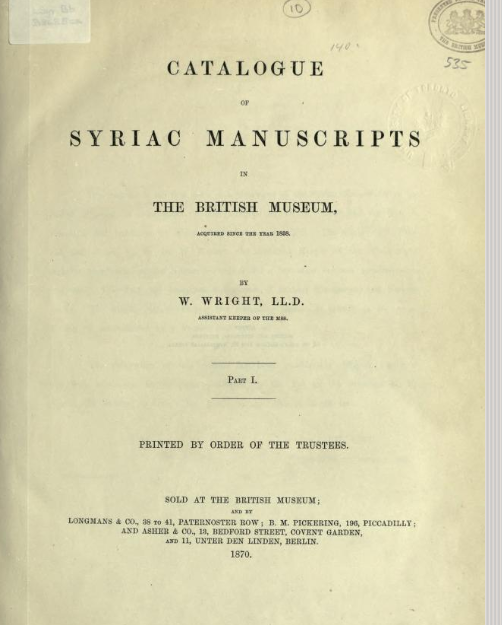
يدعي المسلمون بالكذب انها تحوي اسم محمد وان اسمه ذكر في مخطوطه لانجيل متى ومرقص وهذا كذب متعمد بينما الحقيقة انها ملاحظة مكتوبة بخط أحد الكتاب السريان الذي كان ينسخ الأنجيل ، وهذه الملحوظة ذكرت هجوم العرب على دمشق وأخذها من يد البيزنطينيين بعد هزيمتهم..وأول من ذكر هذا هو Wright خلال تبويبه للمخطوطات السريانية الموجودة في المتحف البريطاني..
طبيعي هذه المخطوطة قديمة وفيها اجزاء غير واضحة ومختلف على فحواها... لكن بالبحث في الكتاب الذي قام Wright بكتابته وهو التبويب الذي قام به للمخطوطات السريانية، فأننا لا نقرأ كلمة محمد على الأطلاق باللغة السريانية...ولا يوجد ذكر لمحمد!
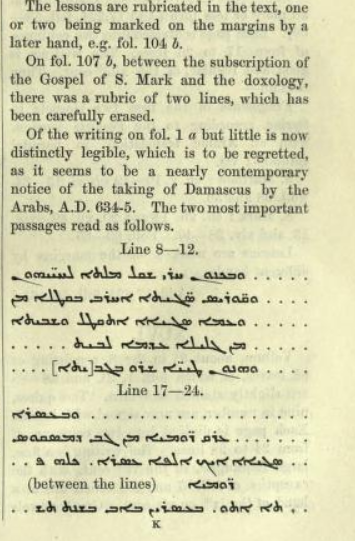
هذا الجزء الاول من المخطوط رقم 14461 المكتوب بالسريانية..ولا يوجد اي شيء عن محمد بالسريانية :
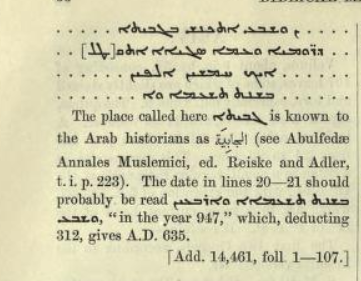
وهذا الجزء في الصفحة الثانية...وايضا لا يوجد اي كلمة محمد بالسريانية!!!
يقول الكاتب :
This much faded note appears to have been penned soon after the battle of Gabitha (AD 636), at which the Arabs inflicted a crushing defeat on the Byzantines. The words ‘we saw’ (line 13: the alternative reading is also in the first person plural) are positive evidence that the author was a contemporary. He speaks of olive oil, cattle (?) and ruined villages, aspects of the invasion important to a native of peasant stock, but never reported by the Arab sources. If he was a peasant who could write,
he was probably a monk or a parish priest. His purpose in jotting this note in the book of the Gospels was probably purely commemorative. He seems to have realized how momentous the events of his time might be. The note is preserved on fol.
1 of BL Add. 14,461, a codex containing the Gospel according to Matthew and the Gospel according to Mark; it has been edited most recently by E. W. Brooks in CM 2, p. 75. The surviving traces are here indicated and annotated in a way that is avoided elsewhere in this book. In addition to the published observations of Noldeke, ‘Zur Geschichte der Araber’, and Brooks, this translation draws on an improved reading of the text by S. P. Brock, which has not been published. Syriacists who want to check the translation must be enabled to do so; and, although the Syriac letters themselves leave non-Syriacists none the wiser, the overall impression that the text is very fragmentary and many of its readings disputable will serve the useful purpose of making them more cautious in formulating any argument they may base on it.
الكاتب لا يقول ان القصة المذكورة هي جزء من متى ومرقس كما يدعي المسلمون كذبا ان اسم محمد مكتوب فيهم .. لكن هذه ملحوظة كتبها الناسخ بالارامية/السريانية على هامش نسخه للأنجيل .. فهي تتحدث عن غزو للقرى وتدمير زيوت الزيتون والماشية .. وهو جزء من الغزو العربي لسوريا .. وعلى الاكثر الناسخ هو راهب او كاهن لابرشية .. ويعزو سبب ذكره لهذه الملحوظة هو الحدث الجلل الذي كان في وقتها اي يقصد الغزو (بطبيعة الحال انجيلي متى ومرقس لا يوجد فيهما اي نص يتحدث عن اي غزو ولهذا فالكلام هو عن ملحوظة كتبها ناسخ الانجيل على الهامش) وليس كما يحاول المسلمون الكذب بان اسم رسولهم مكتوب على مخطوطات للانجيل ..!
والملاحظة المكتوبة في الهامش بجانب الكلمة التي يقولون انها محمد هي :
{Syr. MWHMD}.
ومكتوب ملاحظة عليها :
Brock, who has reexamined the manuscript,
finds this word ’very uncertain’; yet Brooks prints M[W]HMD, without showing that it is a doubtful reading.